

Manufacturing Operations
Factory Floor Digitisation: Why 2026 Is the Year to Move Beyond Paper Job Cards
7 April 2026
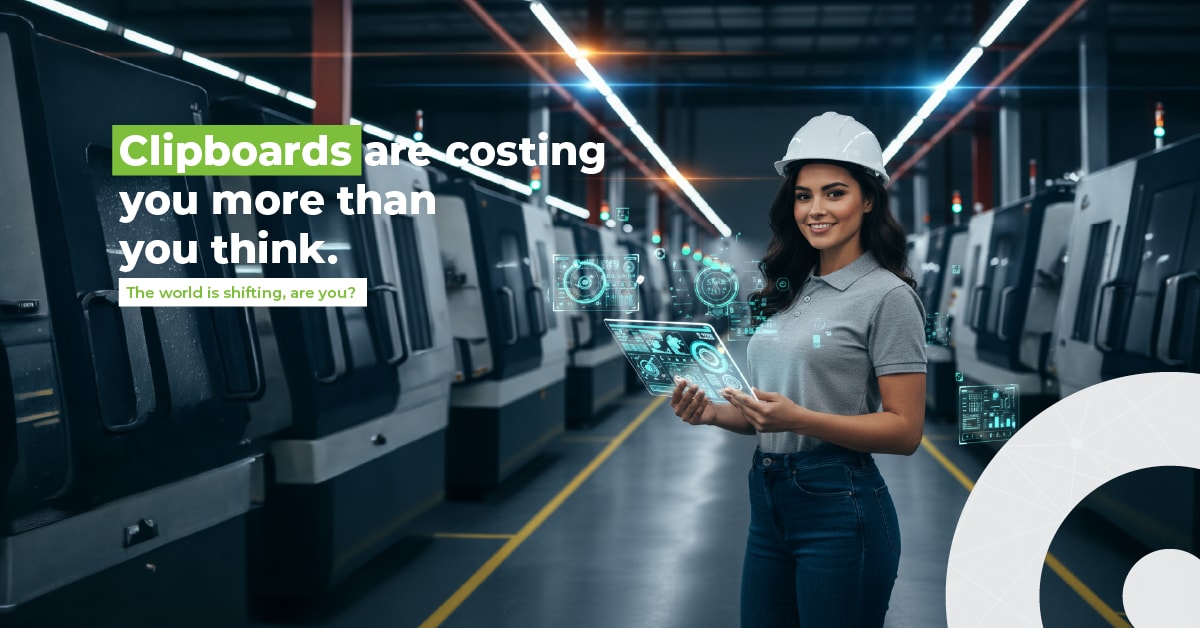
Factory Floor Digitisation is no longer optional for manufacturers in 2026.
Walk onto most factory floors in 2026, and you will still find clipboards. Whiteboards filled with handwritten production schedules. Job cards passed between shifts like relay batons, smudged and sometimes illegible. It is a striking contradiction: businesses that have invested heavily in ERP systems, financial controls, and supply chain technology still run their most critical value-creation process, the shop floor, on paper.
This year, that gap is becoming impossible to ignore. The convergence of affordable connected worker platforms, mature MES technology, and growing labour pressures is making factory floor digitisation not just desirable but essential for survival.
The Real Cost of Paper on the Shop Floor
Paper-based processes bleed value slowly. A job card that doesn’t capture actual start and stop times means your costing is based on estimates, not reality. A whiteboard schedule that can’t be updated in real-time means planners work with stale information. Manufacturers relying on manual tracking consistently report inaccurate job costing, poor on-time delivery visibility, unplanned downtime that could have been predicted, and a persistent gap between what the ERP says is happening and what is actually happening on the floor.
When your ERP and your factory floor speak different languages, neither can perform at its best.
Why 2026 Is Different
Three forces are converging to make this the year of practical action.
First, the technology is mature and affordable. Modern MES platforms have moved from expensive, monolithic deployments to modular, cloud-connected solutions that can be rolled out in weeks. Web-based interfaces mean operators can interact through tablets, touch screens, or smartphones, no specialised hardware required.
Second, labour pressures demand it. The skilled workforce shortage is not easing. Every minute an operator spends writing on a clipboard is a minute they are not adding value to the product.
Third, customer expectations have risen. Buyers increasingly require real-time order status visibility, accurate delivery commitments, and documented quality traceability. Delivering on these expectations is nearly impossible when your shop floor data lives on paper.
What a Connected Factory Floor Actually Looks Like
With SYSPRO MOM (Manufacturing Operations Management), operators clock onto jobs digitally. Machine performance data flows into the system in real-time. Supervisors see live production status on interactive scheduling boards. Quality checks are recorded at the point of inspection. All of this data feeds directly back into SYSPRO ERP: job costing reflects actual hours, inventory levels update as production completes, and planning has visibility into what is genuinely available right now.
The Mobile and Scanning Advantage
Mobile and scanning technology is one of the most practical accelerators for factory floor digitisation. Barcode and QR scanning at goods receipt, work-in-progress stations, and dispatch points eliminates manual data capture errors. For maintenance teams, mobile access means work orders are raised, tracked, and closed digitally, building the data foundation for a shift from reactive break-fix to planned preventive maintenance.
At Lancea Konsult, we see mobile and scanning solutions as the quickest win for manufacturers beginning their digitisation journey.
Overcoming the “We’ve Always Done It This Way” Barrier
The biggest obstacle is rarely the technology, it is change resistance. Three principles ensure successful adoption: involve the floor from day one; start small and prove value fast on a single line before rolling out further; and make it simpler than paper so that the most common actions take fewer steps than the paper equivalent.
The Competitive Edge of Real-Time Shop Floor Data
Manufacturers who connect their factory floor to their ERP gain the ability to make decisions based on what is happening right now. Real-time OEE metrics reveal underperforming assets before they become bottlenecks. Live production tracking enables accurate delivery promises. When shop floor data flows into tailored action dashboards, managers get a single, trusted view of operational performance, without waiting for someone to compile a report.
Ready to Connect Your Factory Floor?
Lancea Konsult has helped manufacturers transition from paper-based shop floor processes to fully connected digital operations using SYSPRO MOM, mobile scanning solutions, and integrated plant maintenance tools. Get in touch to see how quickly you can move from clipboards to connected operations.
Running SYSPRO and want a second opinion?
Talk to the Lancea Konsult team about your environment.